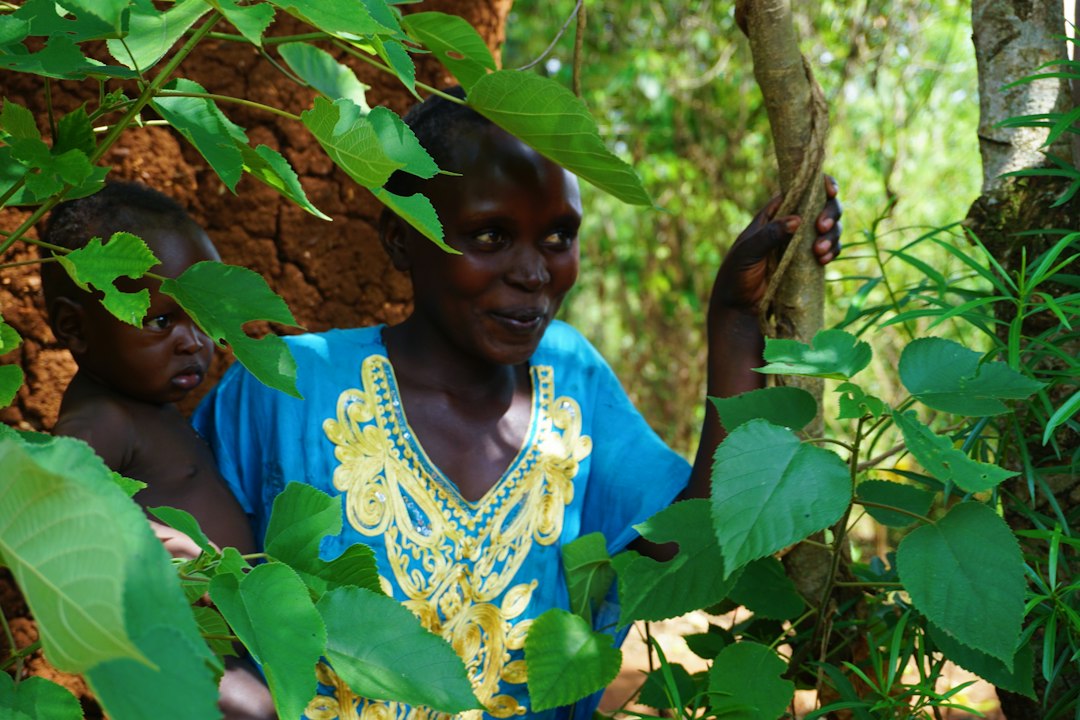
Africa’s Case for Cooperative Self-Reliance
Recent crises have exposed the vulnerabilities of African food systems, stemming from its integration into the global economy and colonial legacies. Strengthening territorial markets, agroecology, and regional cooperation can build greater resilience, sovereignty, and sustainability.
This is a preview of subscription content, access via your institution.
Access options:
- Access Nature and 54 other Nature Portfolio journals
- Get Nature+, our best-value online-access subscription
- Subscribe to this journal
- Buy this article
Prices may be subject to local taxes which are calculated during checkout
References:
- IPES-Food. The New Geopolitics of Food: Navigating Policies for Resilient Self-reliance (IPES-Food, 2026).
- Rodney, W. How Europe Underdeveloped Africa (Bogle-L’Ouverture, 1972).
- Nyerere, J. K. Freedom and Development (Oxford Univ. Press, 1973).
- Amin, S. Accumulation on a World Scale: A Critique of the Theory of Underdevelopment (Monthly Review Press, 1974).
- Nyéléni Forum. Declaration of Nyéléni (27 February 2007).
- Edelman, M. et al. J. Peasant Stud. 41, 911–931 (2014).
- FAO. Territorial Markets and Local Food Systems (FAO, 2021).
- AFSA. Territorial Markets: A Pathway to Food Sovereignty in Africa (Alliance for Food Sovereignty in Africa, 2023).
- Van der Ploeg, J. D. The New Peasantries (Routledge, 2008).
- High Level Panel of Experts on Food Security and Nutrition. Agroecological and Other Innovative Approaches for Sustainable Agriculture and Food Systems that Enhance Food Security and Nutrition (HLPE, 2019).
- IPES-Food. From Uniformity to Diversity (IPES-Food, 2016).
- Altieri, M. A. & Nicholls, C. I. Agroecol. Sustain. Food Syst. 41, 231–237 (2017).
- Clapp, J. Titans of Industrial Agriculture (MIT Press, 2025).
- Friedmann, H. & McMichael, P. Sociol. Rural. 29, 93–117 (1989).
- Patel, R. Stuffed and Starved (Portobello Books, 2007).